


Paládio do nanopowder do nanopowder de CAS 7440-05-3 Pd como o catalizador
Tamanho: 20-30nm Pureza: 99,95% Nr. CAS: 7440-05-3 ENINEC No.: 231-115-6 Aparência: pó preto Forma: esférica

Tamanho: 20-30nm Pureza: 99,95% Nr. CAS: 7440-05-3 ENINEC No.: 231-115-6 Aparência: pó preto Forma: esférica
Nós podemos fornecer produtos de tamanho diferente de siliceto de nióbio em pó de acordo com as necessidades do cliente. Tamanho: 1-3um; Pureza: 99,5%; Forma: granular Nº CAS: 12034-80-9; Nº ENINEC: 234-812-3
Partícula de Ni2Si, pureza de 99,5%, forma granular, é usado para circuito integrado microeletrônica, filme de siliceto de níquel, etc. Tamanho: 1-10um; Nº CAS: 12059-14-2; Nº ENINEC: 235-033-1
Pontos quânticos de carbono (CQDs) Os pontos quânticos de carbono (CQDs), materiais luminescentes ecologicamente corretos, geralmente exibem altos rendimentos quânticos em condições de fotoluminescência. Os CQDs tradicionais podem atingir um rendimento quântico de fotoluminescência (PLQY) superior a 80% em solução, mas o PLQY diminui significativamente em filmes finos de estado sólido, resultando em dispositivos de LED baseados em CQDs com brilho e eficiência muito inferiores aos dispositivos de pontos quânticos contendo metais pesados. O desenvolvimento de novos CQDs que possam aprimorar a luminescência na matriz tornou-se um desafio fundamental para impulsionar o desenvolvimento da próxima geração de tecnologias de luminescência sustentáveis.
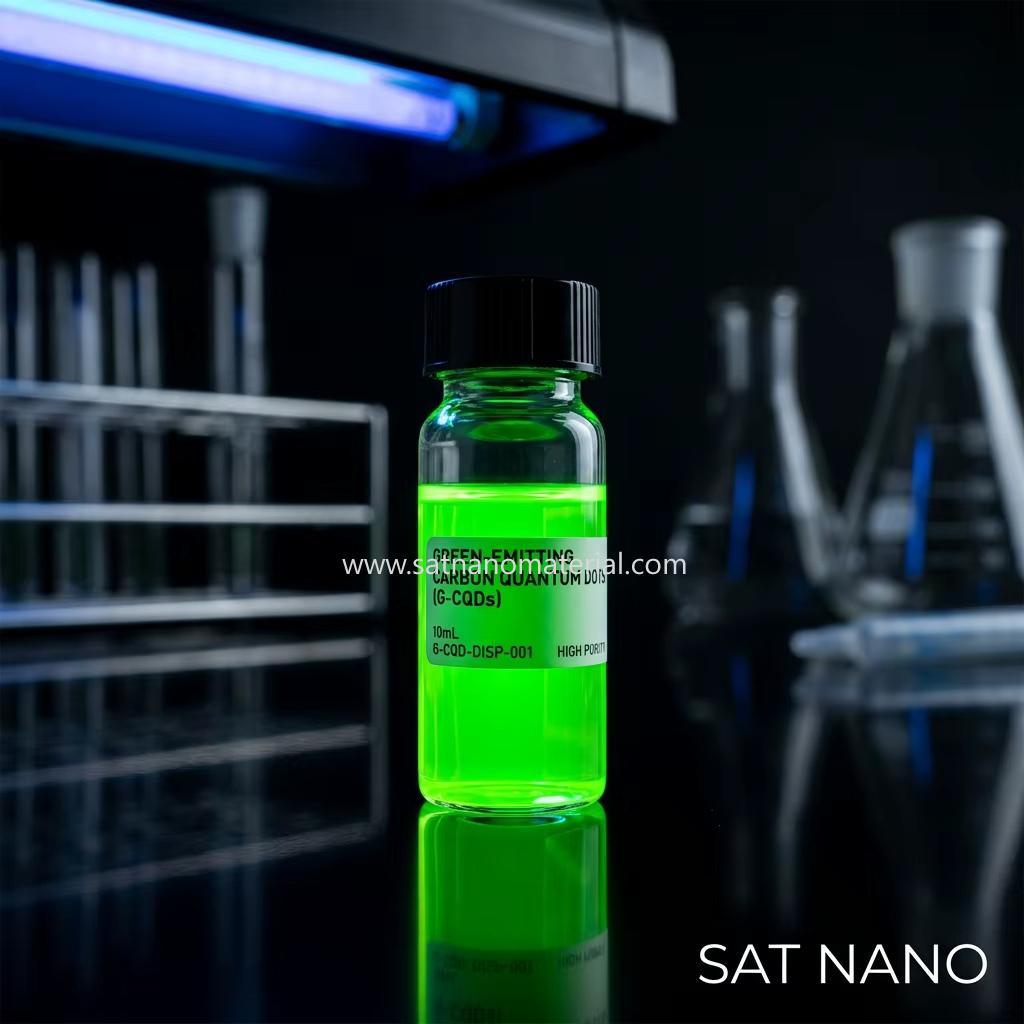
A revista Advanced Functional Materials relata que pesquisadores desenvolveram uma nova classe de pontos quânticos de carbono (CQDs) com efeito MIE (luminescência induzida por matriz) sem precedentes, por meio de um projeto racional de engenharia molecular. Esses CQDs foram sintetizados pelo método solvotérmico em condições alcalinas fortes de etanol, utilizando 2,5-dimetoxifenil-1,4-diformaldeído (DMDD) e 2-naftilacetonitrila como precursores.
Ao contrário dos CQDs convencionais, os CQDs MIE exibem apenas 15% de PLQY em solução diluída, mas esse valor aumenta para 31% em pó sólido. No entanto, quando dispersos em matrizes poliméricas como o polimetilmetacrilato (PMMA), seu PLQY é significativamente aprimorado para mais de 70%. Por meio de análises estruturais, ópticas e fotofísicas abrangentes, pesquisadores confirmaram que o efeito de aprimoramento se origina da restrição do movimento intramolecular em estruturas não planares, suprimindo efetivamente a recombinação não radiativa.
Com base no excelente desempenho de luminescência em estado sólido dos CQDs MIE, a equipe de pesquisa construiu um dispositivo eletroluminescente processado em solução. Ao dopar os CQDs MIE no material TADF de fluorescência retardada termicamente ativada CzAcSF como matriz hospedeira e combinar PO-T2T como camada de transporte de elétrons, o dispositivo alcançou coleta de excítons e transferência de energia eficientes.
O LED otimizado emite a 510 nm, com um brilho máximo superior a 10.000 cd m⁻², uma eficiência de corrente de 20 cd A⁻¹ e uma eficiência quântica externa (EQE) superior a 7%, superando significativamente a limitação de desempenho dos LEDs de pontos quânticos de carbono (CQDs) fluorescentes tradicionais. Além disso, o dispositivo construído diretamente com CQDs de MIE como camada luminescente emitiu a 603 nm, atingindo um alto brilho de 8.366 cd m⁻², estabelecendo um novo recorde para o brilho de LEDs de CQDs de comprimento de onda longo.

Este estudo fornece uma estratégia eficaz para projetar pontos quânticos de carbono com luminescência induzida por matriz de alto desempenho, o que deverá impulsionar o desenvolvimento da tecnologia de diodos emissores de luz.
Título da publicação: Aprimoramento inédito da emissão induzida por matriz possibilita diodos emissores de luz eletroluminescentes brilhantes e eficientes baseados em pontos quânticos de carbono


 serviço on-line
 13929258449
 admin@satnano.com
 + 8613929258449